
Nebraska in a Box Shopify Theme Rebuild
A rebuilt Impulse theme for a Nebraska gift box store. Add to cart rate went from 2.39% to 5.40%, and dead clicks and JavaScript errors dropped sharply, during peak season.
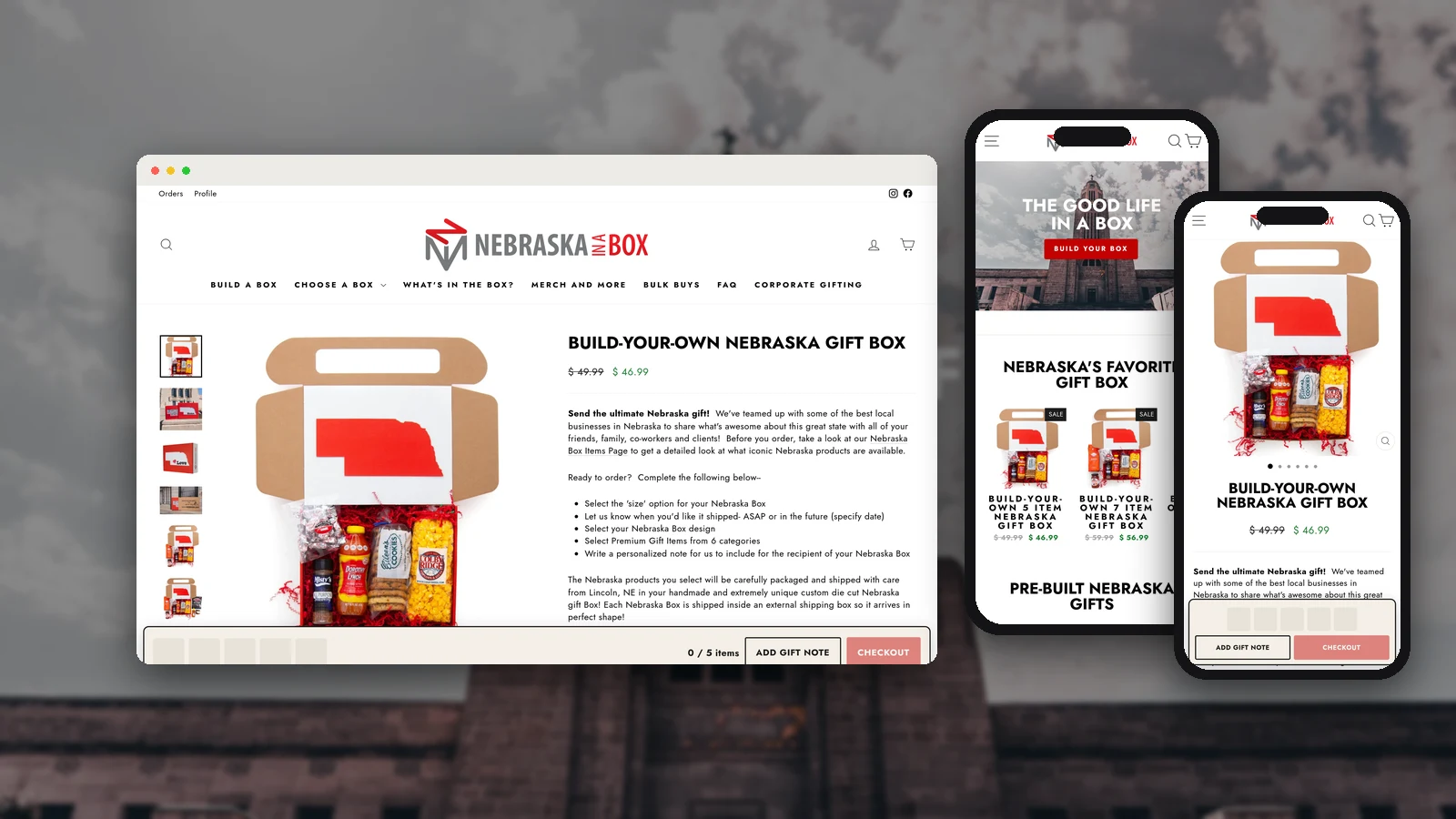
A Shopify gift box store where most shoppers arrive on a phone, many from Facebook. A cleaner mobile buying experience made it easier to build a box and add it to the cart.
A rebuilt Impulse theme for a Nebraska gift box store. Add to cart rate went from 2.39% to 5.40%, and dead clicks and JavaScript errors dropped sharply, during peak season.
Client / brand
Nebraska in a Box is a Shopify store that sells gift boxes filled with Nebraska made products. Shoppers can pick a ready-made box or use Build Your Own to put together a custom gift.
Most of the store's traffic is mobile, and a large share of it comes through Facebook's in-app browser. That means the buying experience has to work well on a small screen, inside a browser most store owners never test.
- Client: Nebraska in a Box
- Store: nebraskainabox.com
- Region: Nebraska
- Engagement: Theme rebuild and launch, focused on mobile conversion
- Industry: Gifts and specialty food
Challenge
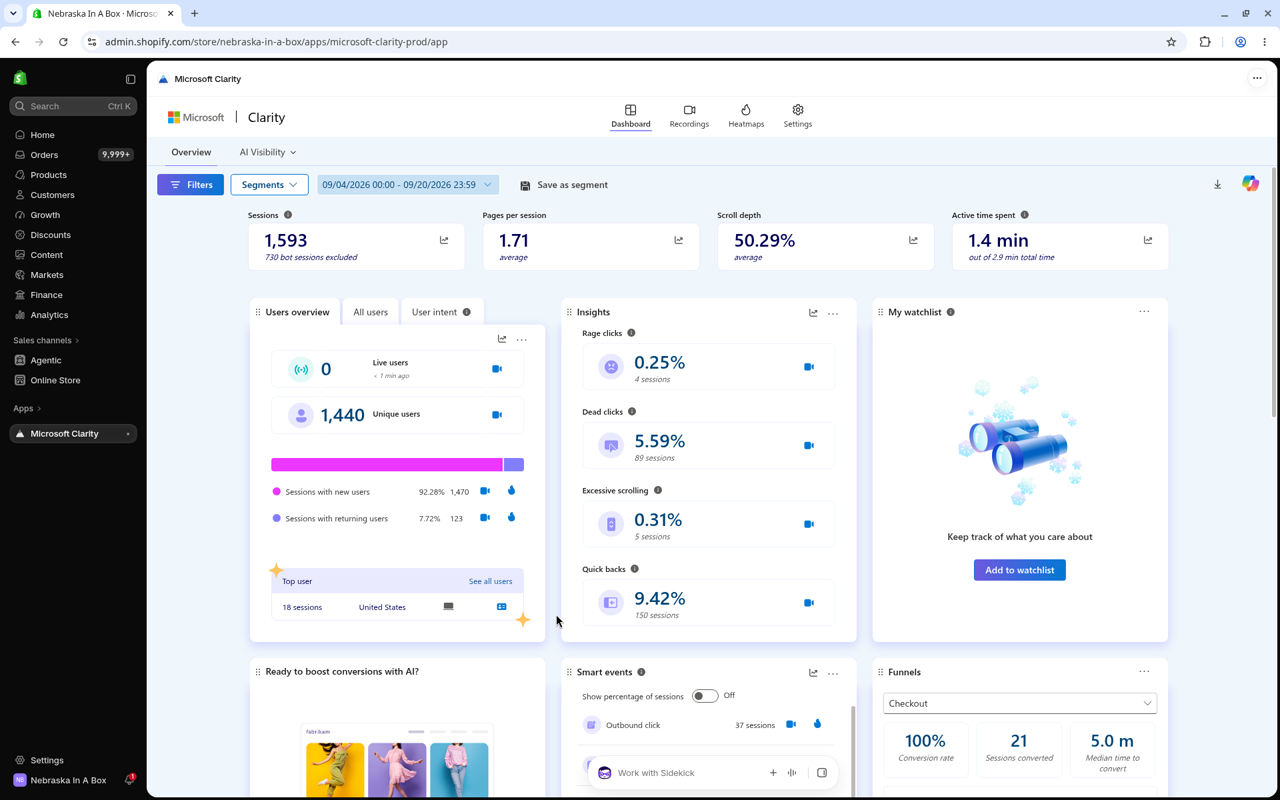
The old theme made the most important part of the store, building a gift box, harder than it needed to be on a phone. Session recordings showed shoppers tapping on things that did nothing (dead clicks on 5.59% of sessions) and running into JavaScript errors on more than 15% of sessions. Only 2.39% of sessions added something to the cart.
The store also heads into its busiest stretch in late September, so the fix had to ship before peak season, not after it.
Approach / what we built
- Rebuilt on the Impulse theme. We rebuilt the store on a fresh Impulse theme and launched it on Monday, September 21, 2026. Starting clean let us drop old code that was causing errors instead of patching around it.
- A simpler Build Your Own gift box flow. Build Your Own is the heart of the store, so we reworked it for mobile first. Clear steps, tap targets that actually respond, and fewer places for a shopper to get stuck between choosing items and adding the box to the cart.
- Easier quantity selection. Gift boxes are often bought in multiples. We made quantity easy to see and change on mobile, so ordering several boxes takes a couple of taps.
- Speed and stability. We cleaned up scripts and page weight so the store loads faster and throws fewer errors, including inside Facebook's in-app browser, where much of the traffic lands.
Before / after
The old theme was replaced at launch, so the clearest before and after view is what shoppers actually experienced. These Microsoft Clarity dashboards cover the 17 days before launch and the 17 days after, with bots excluded.

Homepage
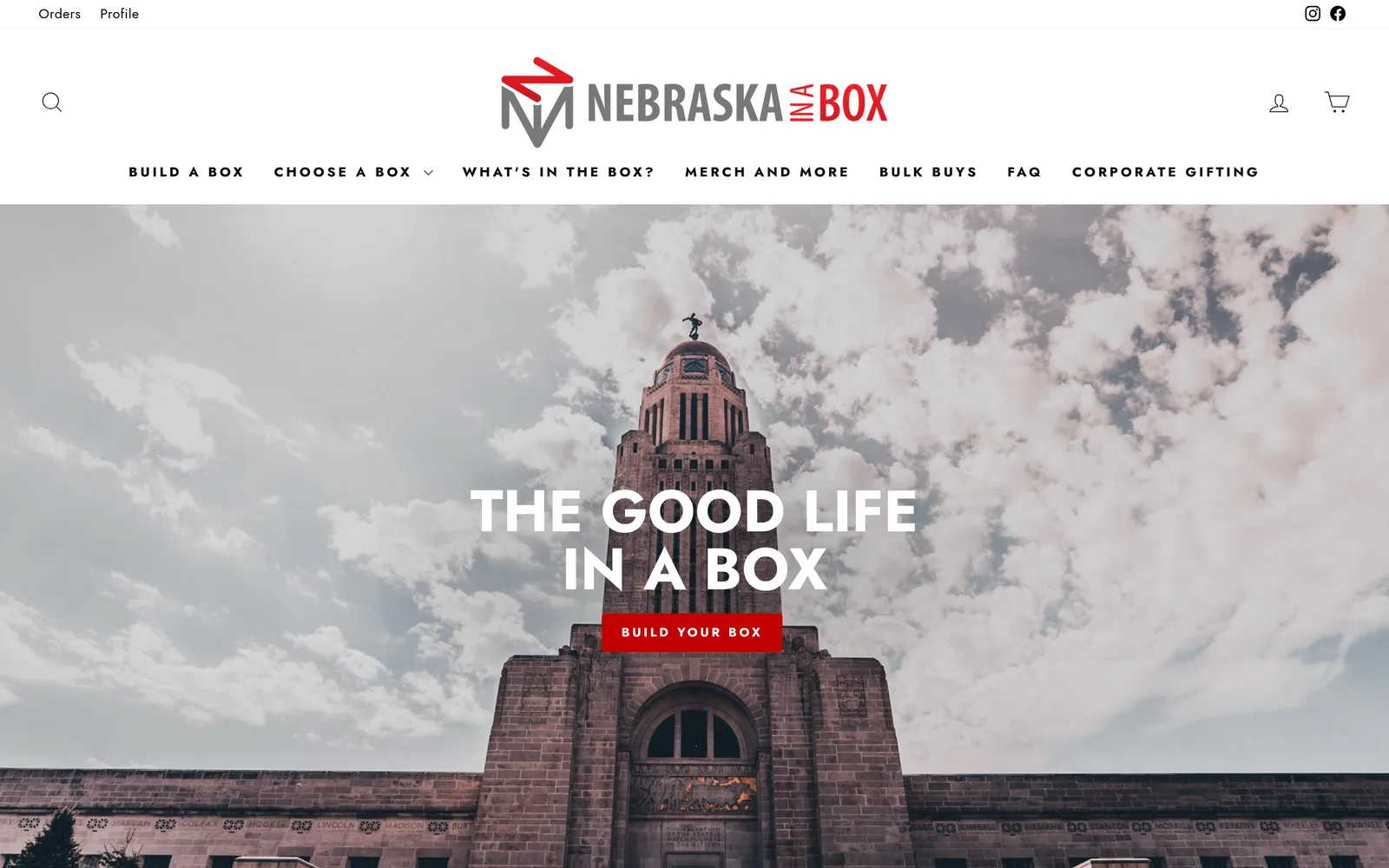
After (desktop home): the rebuilt Impulse theme with a clean header, a Build Your Box call to action in the hero, and Nebraska's favorite gift boxes right below.
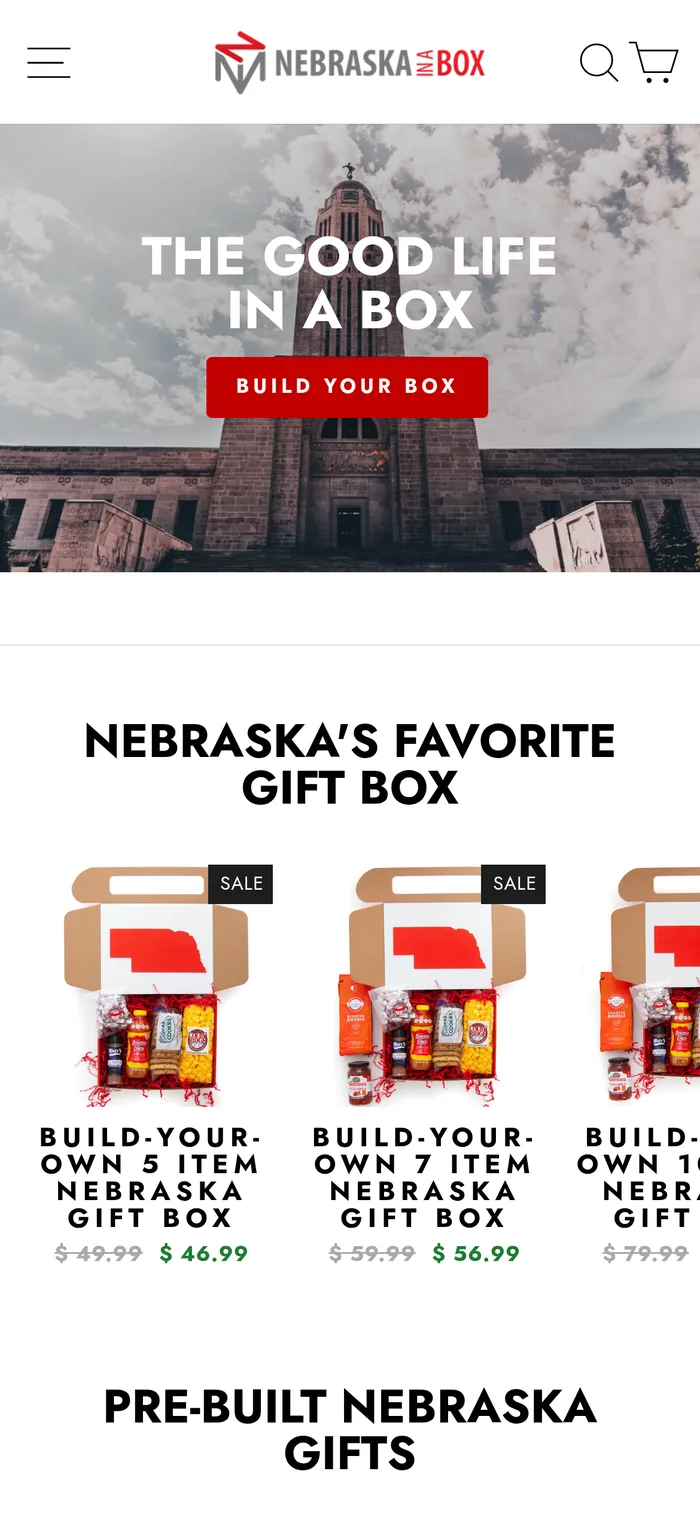
After (mobile home): the same experience stacked for phones, where most of the store's traffic lands.
Build Your Own gift box
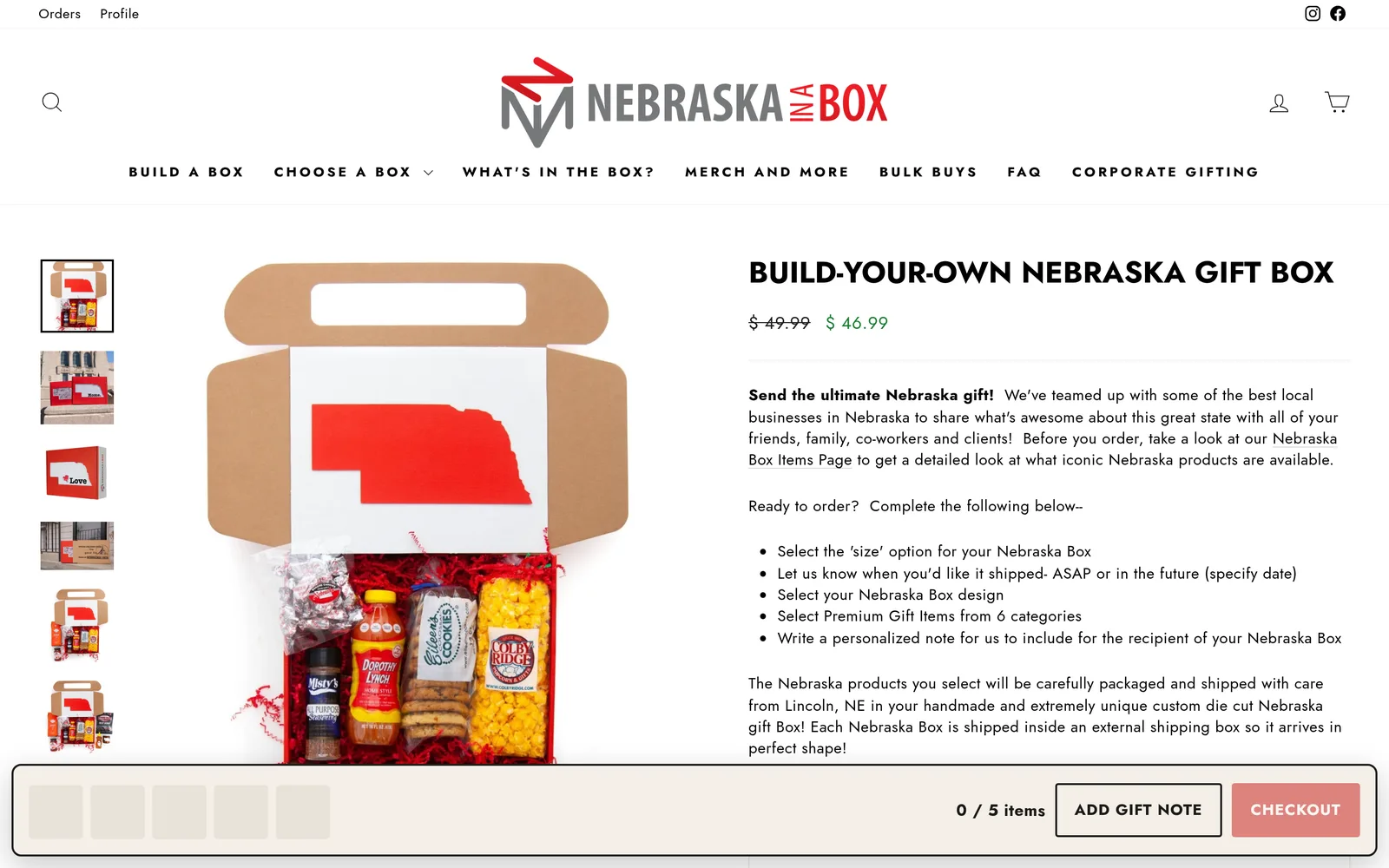
After (Build Your Own): clear steps, a running item count, and Add Gift Note and Checkout buttons that stay in reach while the shopper builds the box.

Results
- Add to cart rate: 2.39% to 5.40% (Shopify Analytics, 17 days before vs 17 days after launch)
- Sessions with dead clicks: 5.59% to 1.41% (Microsoft Clarity, bots excluded)
- Sessions with JS errors: 15.44% to 9.52% (Microsoft Clarity, bots excluded)
- Orders year over year: +13% (270 vs 239, same dates in 2025)
We compared two 17-day windows and left launch day out: September 4 to 20, 2026 before launch, and September 22 to October 8, 2026 after. Late September is a busy season for this store, so we also checked the same dates in 2025 to separate the theme from the calendar.
The clearest change was add to cart. It more than doubled, from 2.39% to 5.40% of sessions. Over the same dates last year, it went the other way (4.32% to 3.14%), so that jump is not just seasonality. Microsoft Clarity showed the same story from the shopper's side: sessions with dead clicks fell from 5.59% to 1.41%, sessions with JavaScript errors fell from 15.44% to 9.52%, pages per session rose from 1.71 to 1.96, and the checkout event rose from 1.32% to 2.98% of sessions. The performance score moved from 78 to 82.
Compared with the same window in 2025, orders were up 13% (270 vs 239) and sales were up 12% on 4% more sessions, with average order value flat. Overall conversion rate was 0.86%, below last year's 1.02% for those dates, and we want to be upfront about that. Traffic shifted heavily toward mobile (55% to 70% of sessions) with a big increase from Facebook, and quick backs rose from 9.4% to 13.0%. That kind of traffic tends to browse more and buy less, which makes the add to cart gain more meaningful, and shows where there is still room to grow.
Results at a glance
- Add to cart rate: 5.40% (from 2.39%)
- Reached checkout: 1.61% (from 1.37%)
- Sessions with dead clicks: 1.41% (from 5.59%)
- Sessions with JS errors: 9.52% (from 15.44%)
- Pages per session: 1.96 (from 1.71)
- Orders: 270 (+13% year over year)
- Total sales: $16,461.67 (+12% year over year)
- Average order value: $59.14 (flat year over year)
Period: Sep 22 to Oct 8, 2026 vs Sep 4 to 20, 2026 (launch day left out), with Sep 22 to Oct 8, 2025 as the seasonality check.
Source: Shopify Analytics (sessions, add to cart, checkout, orders, sales, AOV) and Microsoft Clarity with bots excluded (dead clicks, JS errors, pages per session). Year over year figures compare the after window with the same dates in 2025.
Stack / deliverables
- Platform: Shopify
- Theme: Impulse, rebuilt for mobile buying
- Work: Theme rebuild and launch, Build Your Own gift box flow, quantity selection, speed and script cleanup
- Measured: Shopify Analytics and Microsoft Clarity, 17 days before and after launch, September and October 2026
- Services: Shopify theme rebuild, Conversion optimization, Speed optimization
Work with us
Selling on Shopify to shoppers who mostly arrive on a phone? Unrestrained Commerce, founded by Nick Perry, rebuilds Shopify stores so it is easier to get from browsing to the cart.
Next project
Looking for a Shopify Development Expert?
Book a FREE 30 minute consultation today


